Cron Jobs
A cron job is a Linux command used to schedule tasks for future execution. It allows you to automate repetitive tasks, such as sending notifications or running scripts at specific intervals.
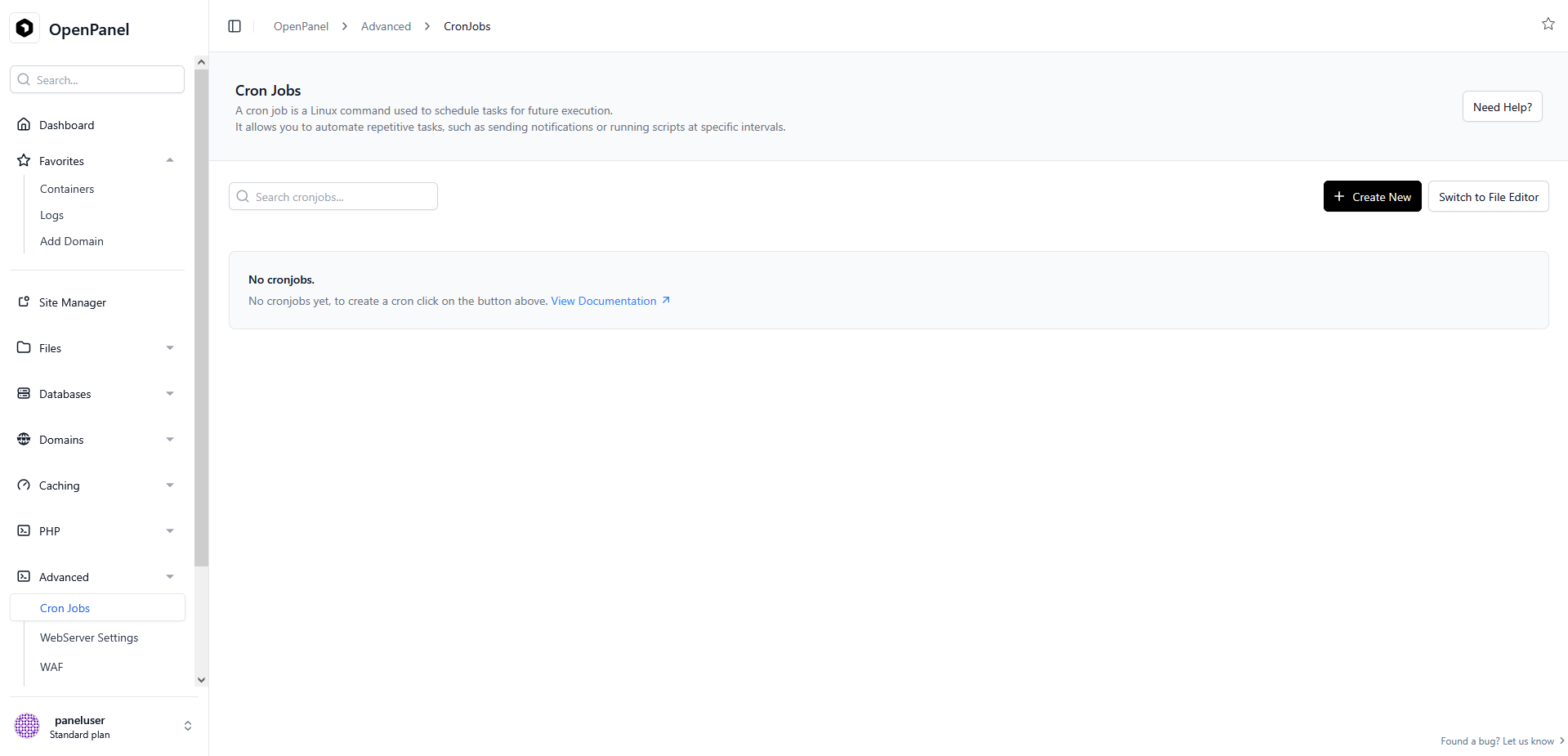
On the CronJobs page you can view currently scheduled tasks, create new, edit or delete them.
Add
To create a new cronjob click on the 'Create New' button and in the new form set the script to be executed, choose a container to execute the script and the desired schedule.
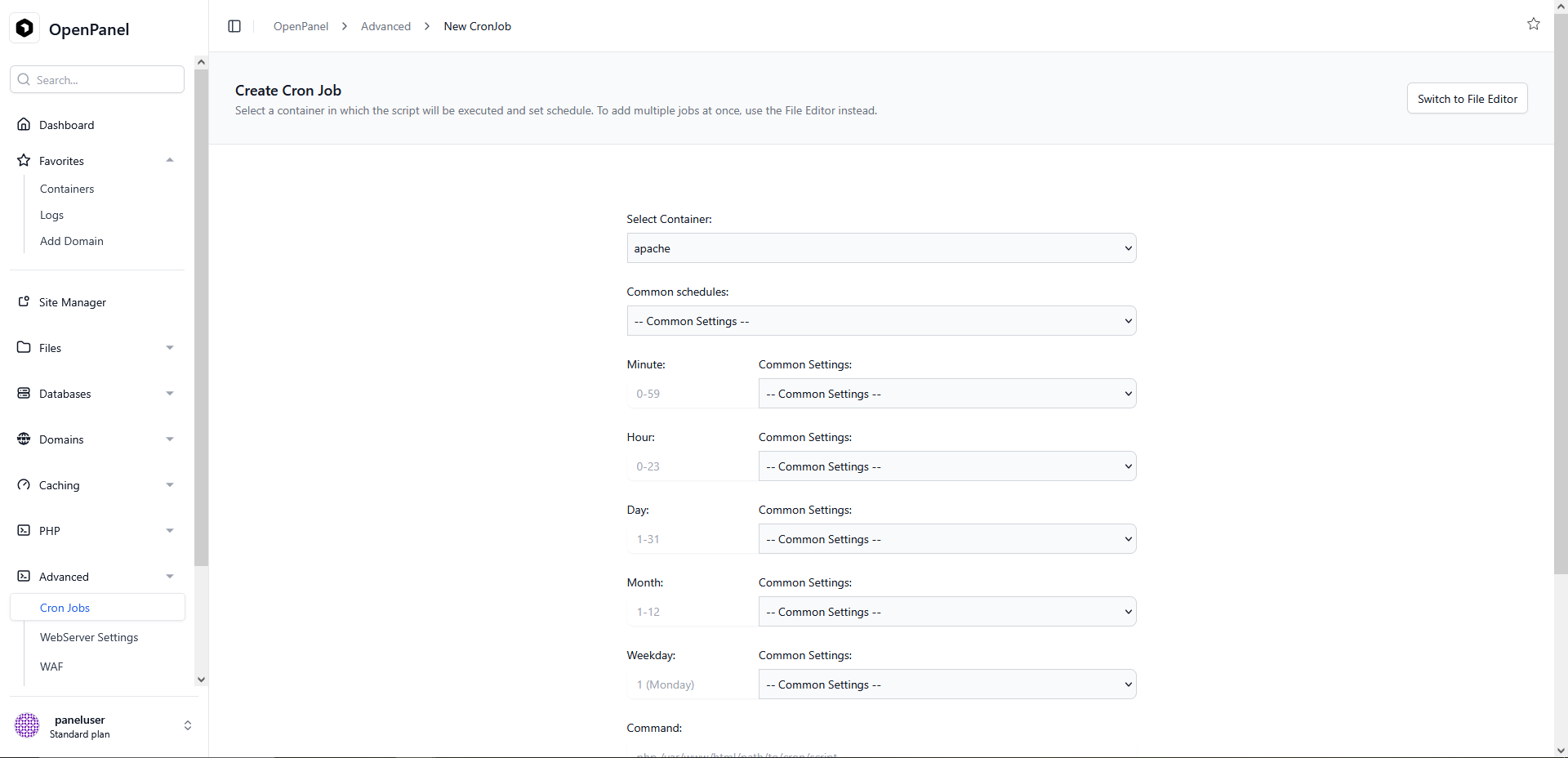
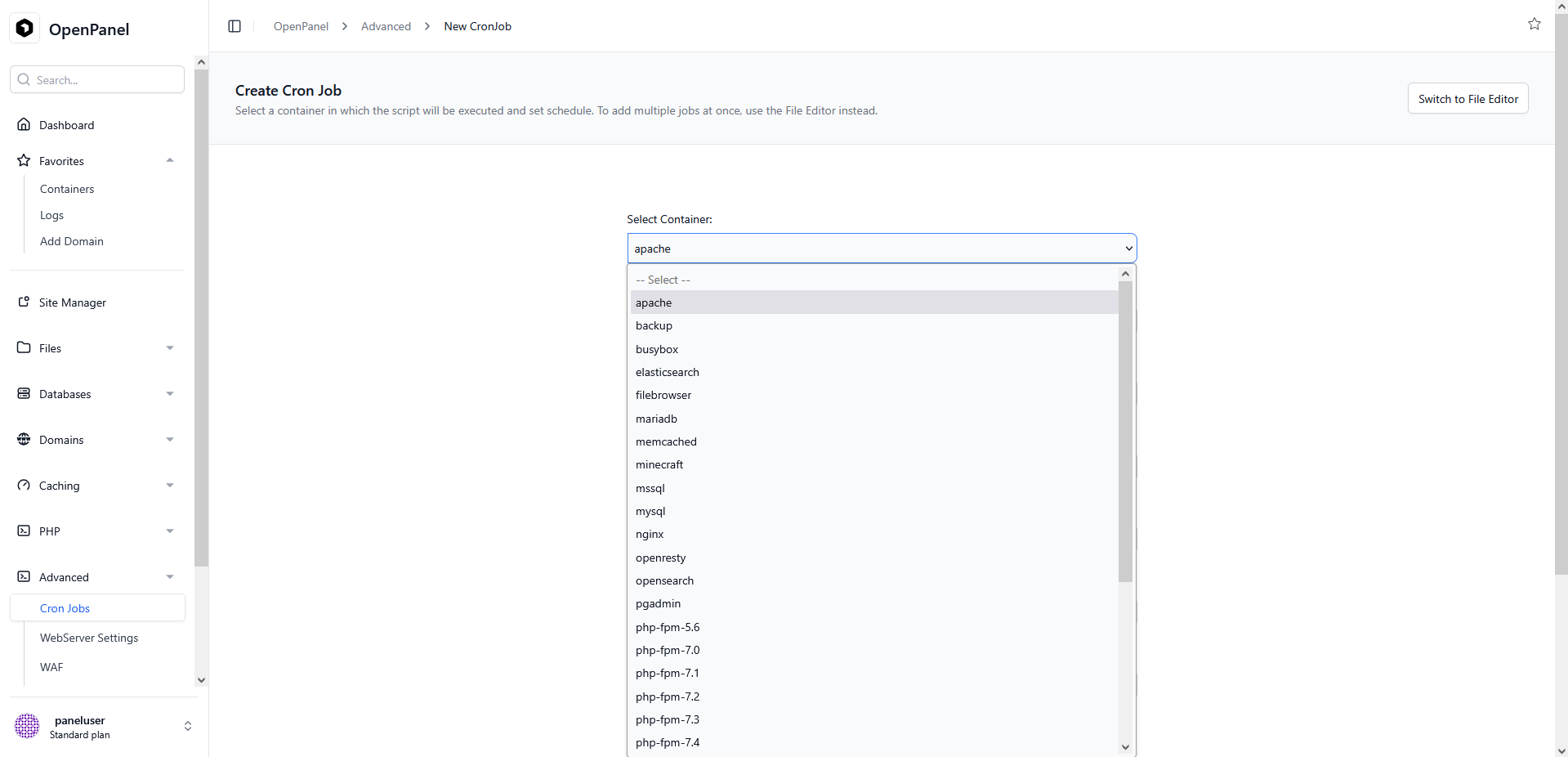
The first field allows you to choose the container which is going to be running the script.
The second field allows you to set a predefined (common) schedule:
- Every 30 Seconds
- Every Minute
- Every 5 Minutes
- Every 30 Minutes
- Hourly
- Daily
- Weekly
- Monthly
- Yearly
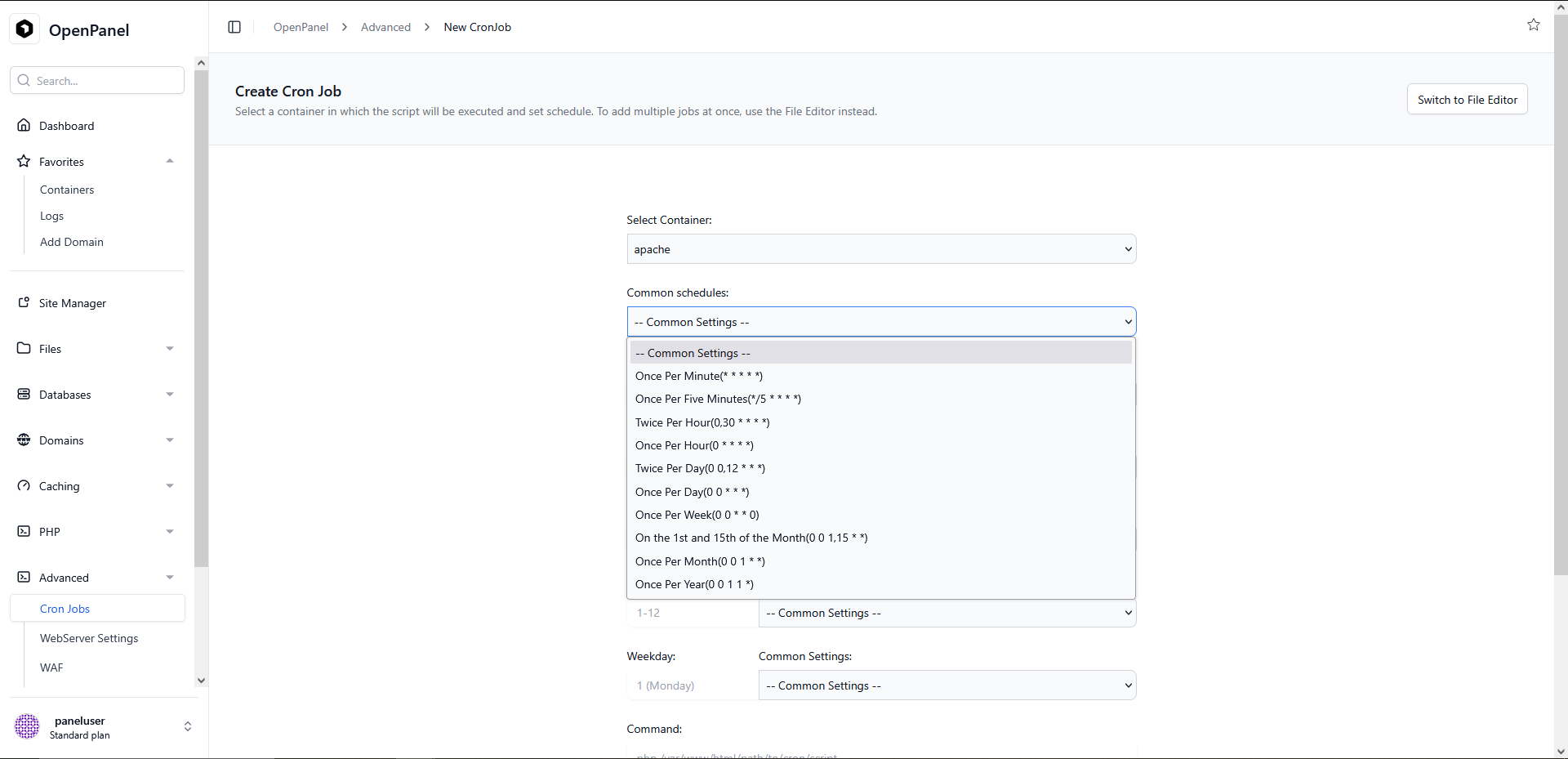
you can also set a standard cron expression representing set of times, using 6 space-separated fields:
| Field name | Mandatory? | Allowed values | Allowed special characters |
|---|---|---|---|
| Seconds | Yes | 0-59 | * / , - |
| Minutes | Yes | 0-59 | * / , - |
| Hours | Yes | 0-23 | * / , - |
| Day of month | Yes | 1-31 | * / , - ? |
| Month | Yes | 1-12 or JAN-DEC | * / , - |
| Day of week | Yes | 0-6 or SUN-SAT | * / , - ? |
There are 6 fields instead of the usual 5 found in standard Unix cron. This is because OpenPanel cron jobs also support scheduling by seconds.
For more information, check CRON_Expression_Format
Edit
To edit an existing cronjob, click on the 'Edit' button next to it. This action will allow you to edit that specific cron job.
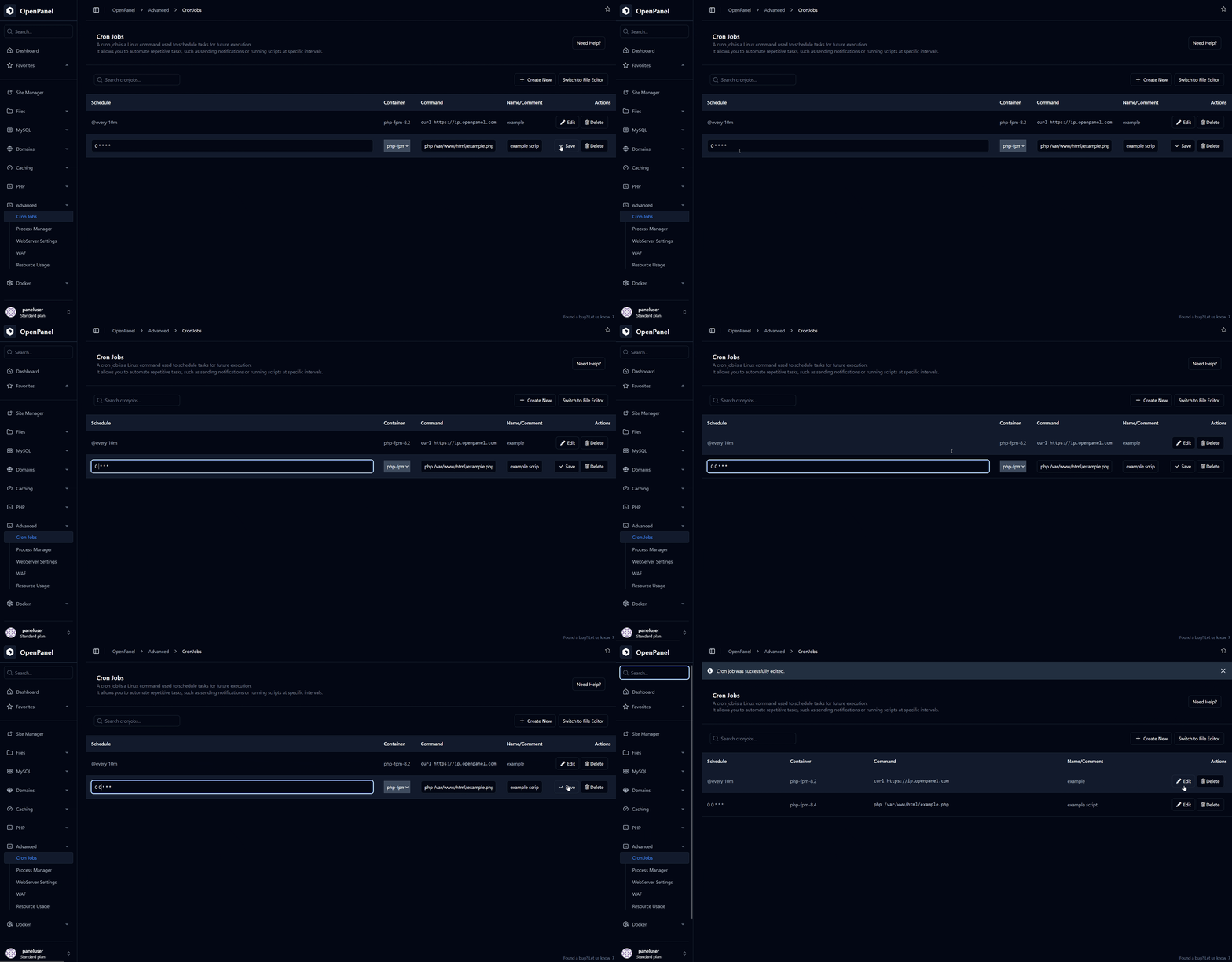
To modify the schedule for when the script is executed you can use a tool such as https://crontab.guru/.
When you're done click on the 'Save' button to update the crontab file with your changes.
Delete
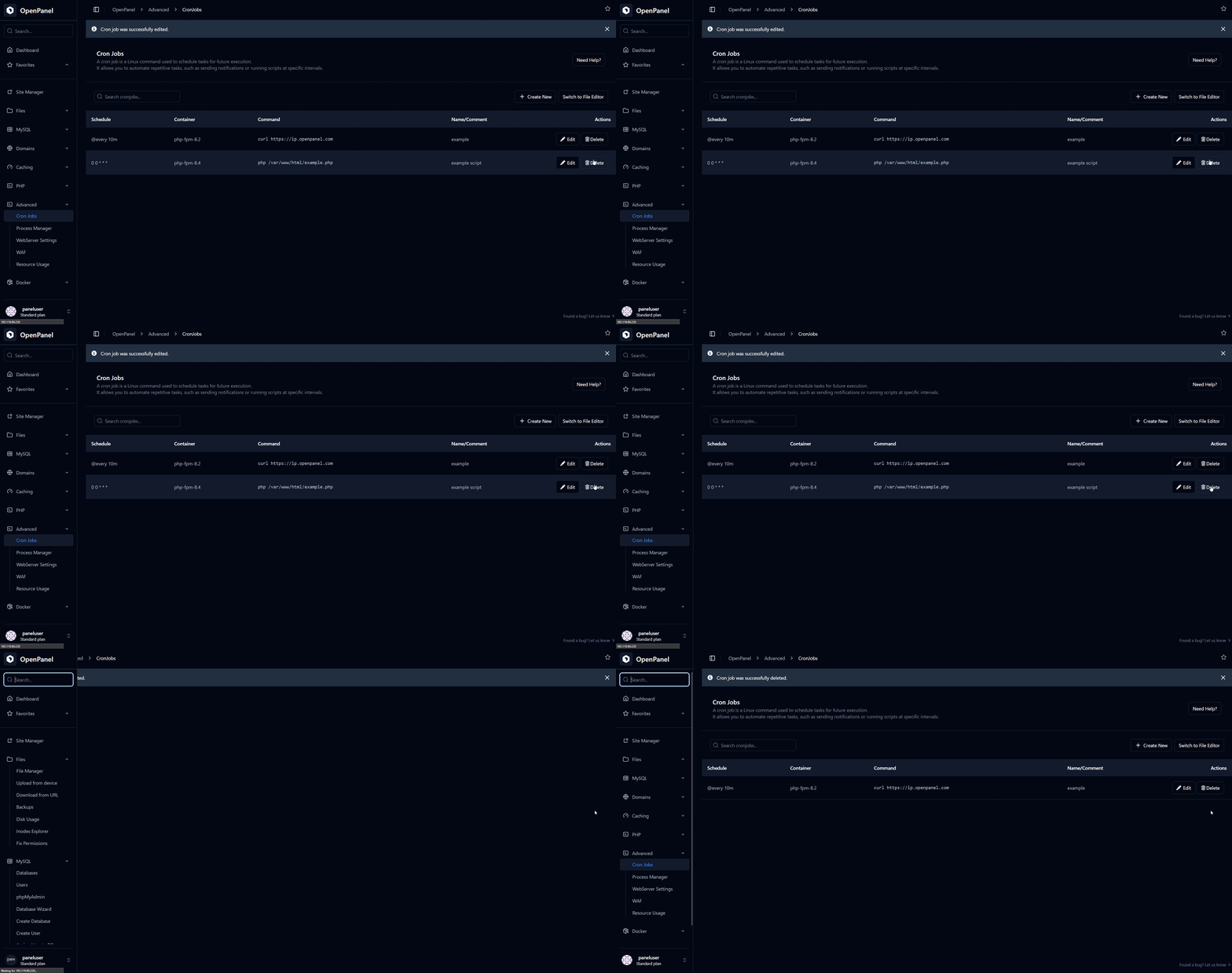
To delete a cronjob, click on the 'Delete' button next to it. The button then switches to a 'Confirm' state with a 5 second countdown - click it again within that window to actually remove the job. If you don't click again, it reverts back to 'Delete' and nothing is removed.
Run Now
To test a cron job without waiting for its schedule, click the 'Run' button next to it. This opens a modal that executes the job's command inside its configured container right away and streams the output live as it runs, followed by the exit code once it finishes.
This is useful for quickly checking that a job is configured correctly before relying on its schedule. Closing the modal disconnects the stream and stops the command if it's still running.
Logs
Each cron job execution is recorded in JSON format.
To view the logs, click the “View Logs” button (or the per-job “Logs” button in a job's row). This opens an inline log panel at the top of the table, where you can filter by job name and choose how many lines to display, and refresh the results.
To filter logs by a specific job name (comment) directly through the API endpoint, append the following parameter to the URL:
?job= followed by the job name. Example: /cronjobs/log?job=whmcs-cron
File Editor
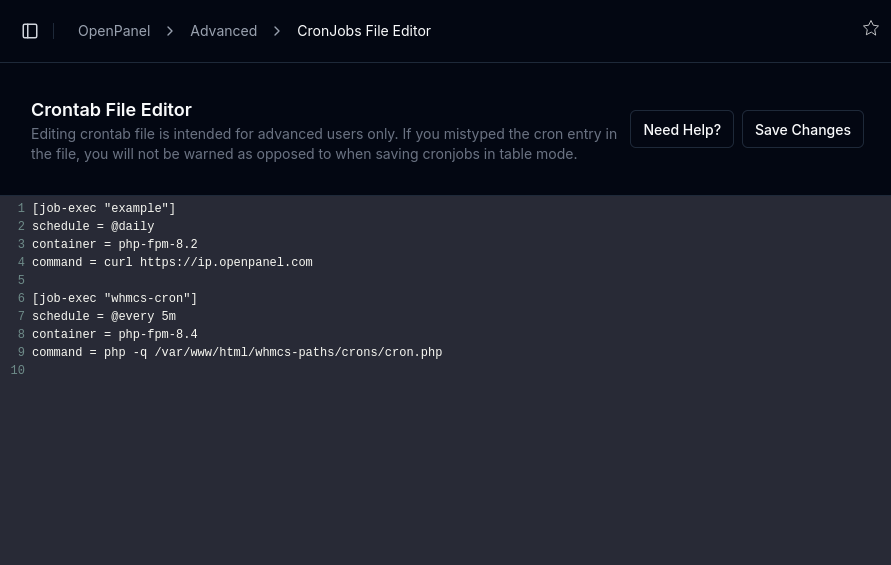
The File Editor option allows you to edit the file where crons are stored. File format is:
[job-exec "JOB_NAME"]
schedule =
container =
command =
Example:
[job-exec "example"]
schedule = @daily
container = nginx
command = curl https://ip.openpanel.com
Another Example:
[job-exec "whmcs-cron"]
schedule = @every 5m
container = php-fpm-8.4
command = php -q /var/www/html/whmcs-paths/crons/cron.php
You can also set no-overlap for a cronjob, to avoid running the job multiple times in parallel if the previous execution did not finish.
Import / Export
Cronjobs can be bulk-edited through a file, making it easy to edit multiple jobs at once or transfer them between servers. Simply click the “Switch to File Editor” button to open the editor.