MySQL Users
This section lists all your MySQL users and offers options to reset a user's password or delete a user.
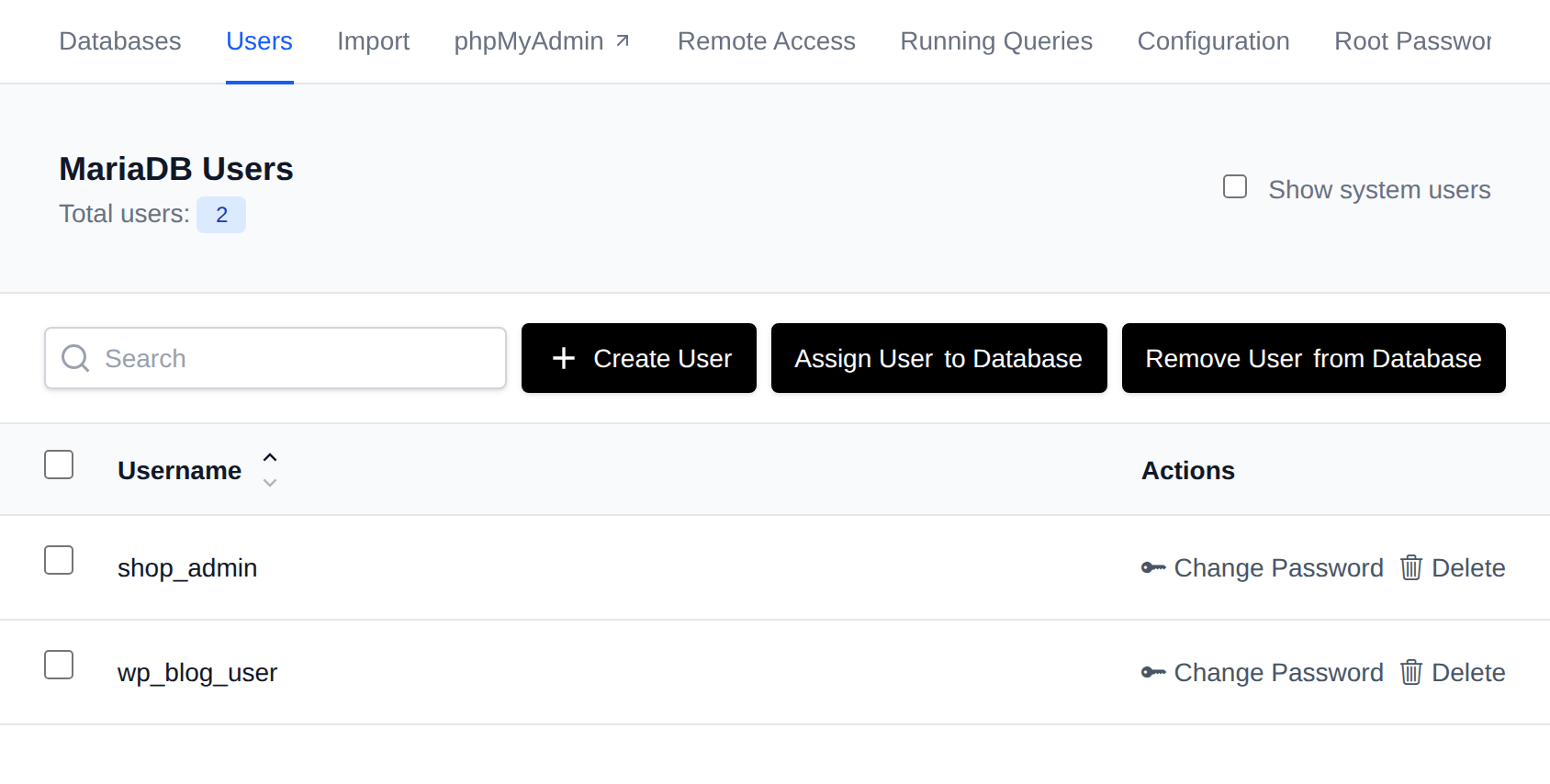
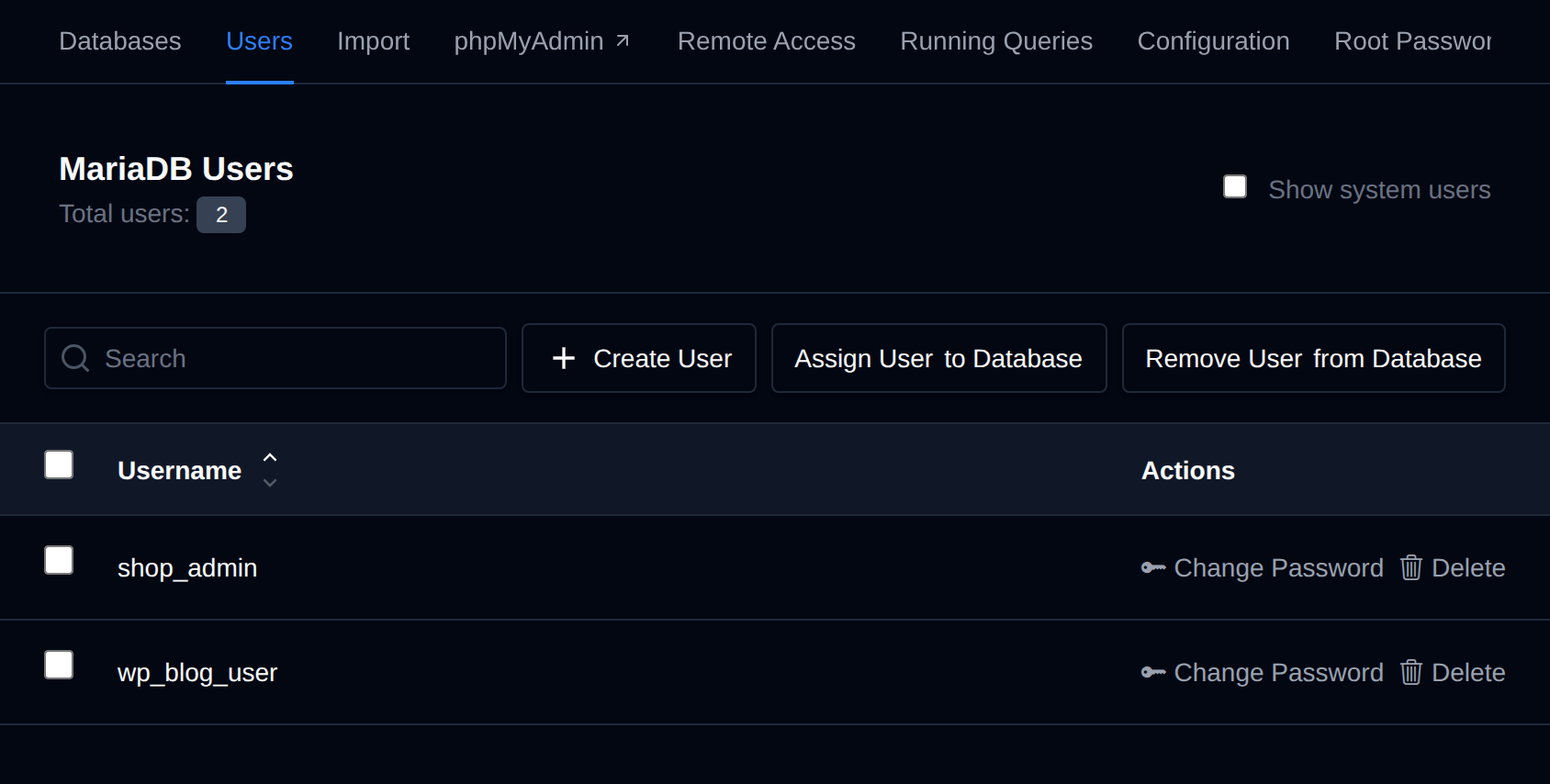
Enable Show system users at the top of the page to also display internal/system MySQL accounts, which are hidden by default.
Available options on the Users page are:
- Create a new user
- Assign a user to a database
- Remove a user from a database
- Reset a user's password
- Delete a user
The Create User, Assign User to Database, and Remove User from Database buttons are disabled while the database service is not running.
Create a New Database User
MySQL users are essential for controlling who can access and interact with your databases, ensuring data security and controlled access to your website's information.
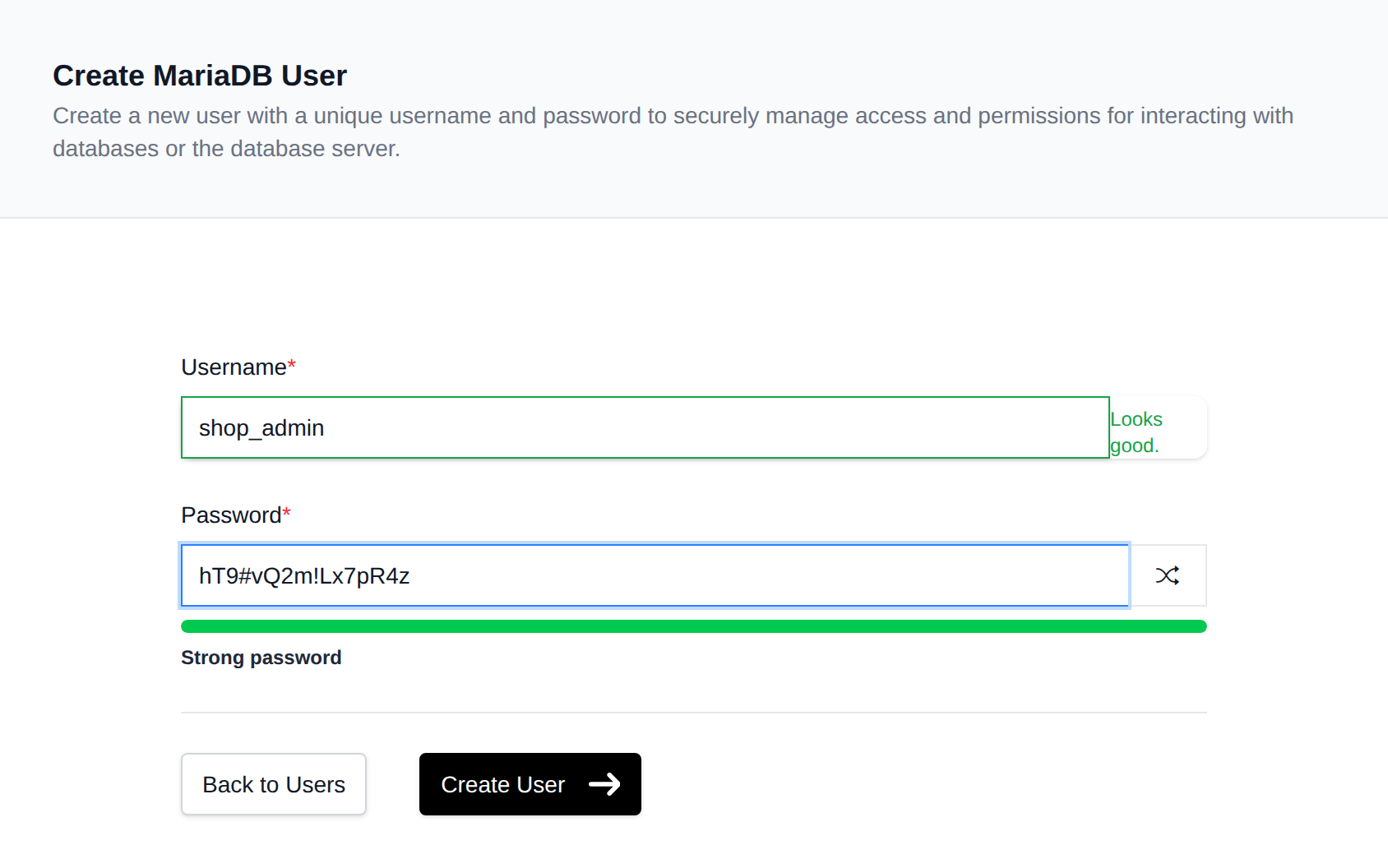
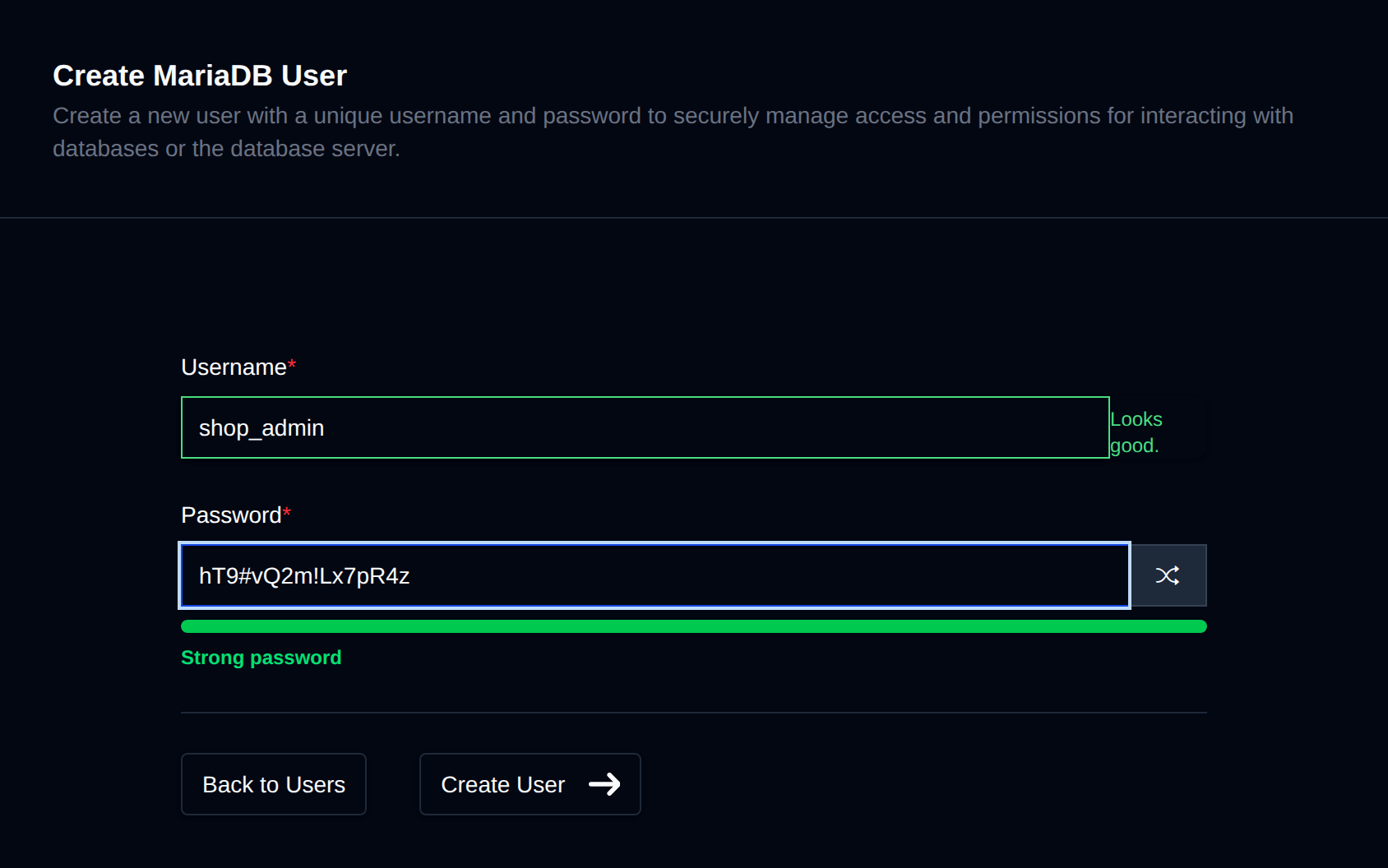
To create a new database user, click on the "Create User" button and fill in the name and password for the new user.
Assign a User to a Database
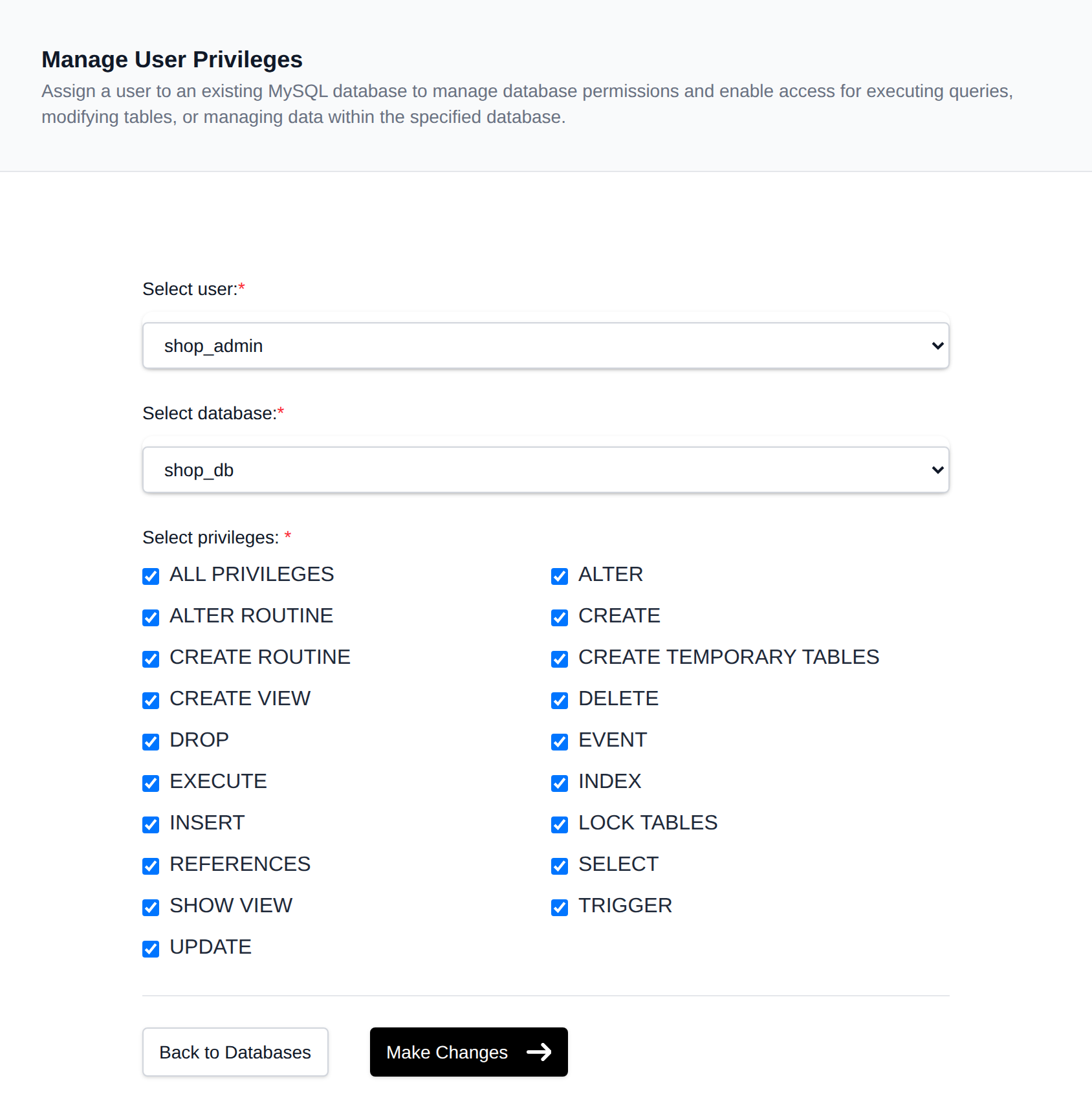
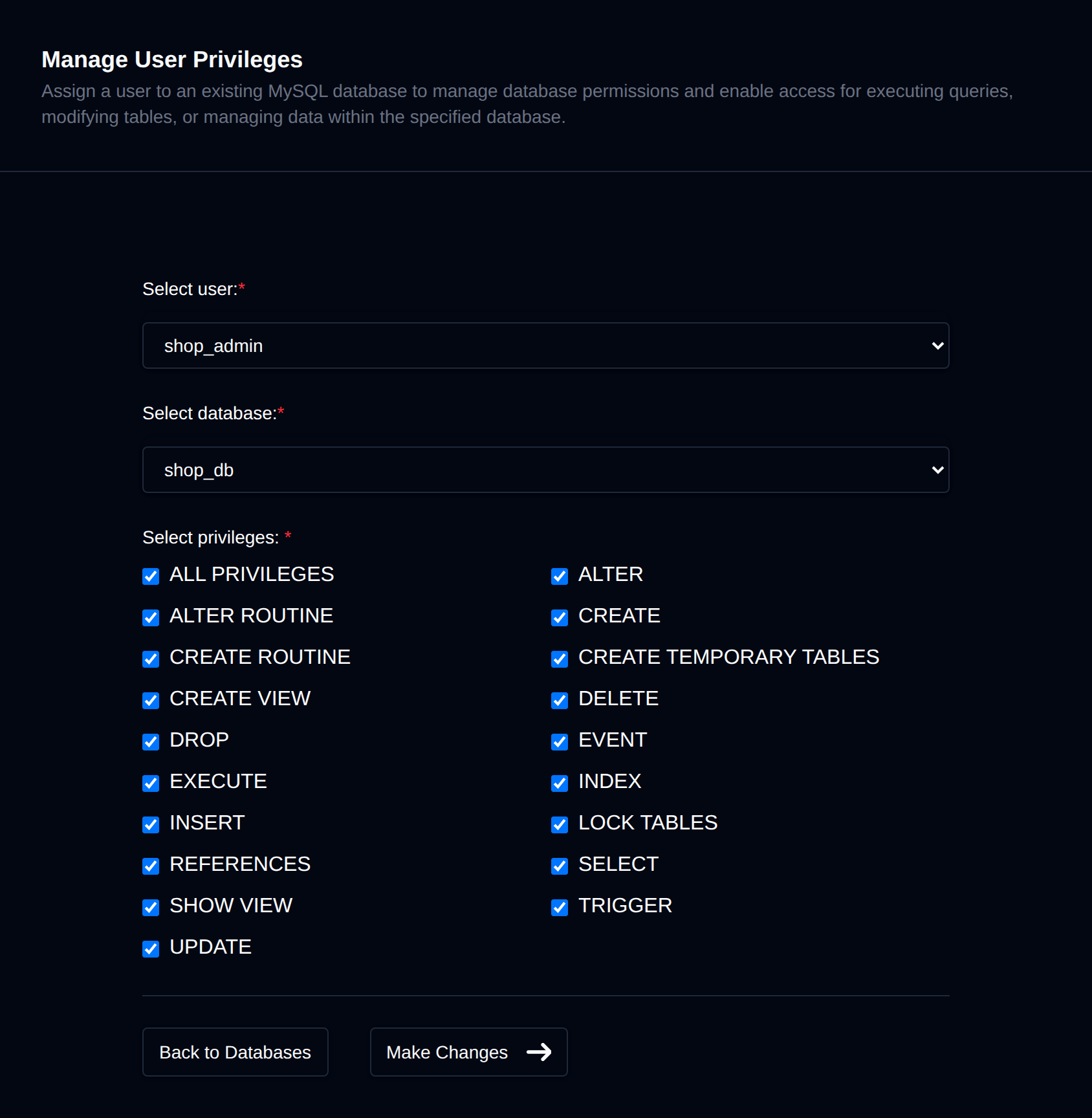
For a MySQL user to be allowed to connect to a database, they need to be added (assigned) to that database. To assign a user to a specific database, click on the "Assign User to Database" button, select a username and database, and choose which privileges to grant.
Remove a User from a Database
To remove a user from a database, simply click on the "Remove User from Database" button, and on that page select a username and database to revoke access from.
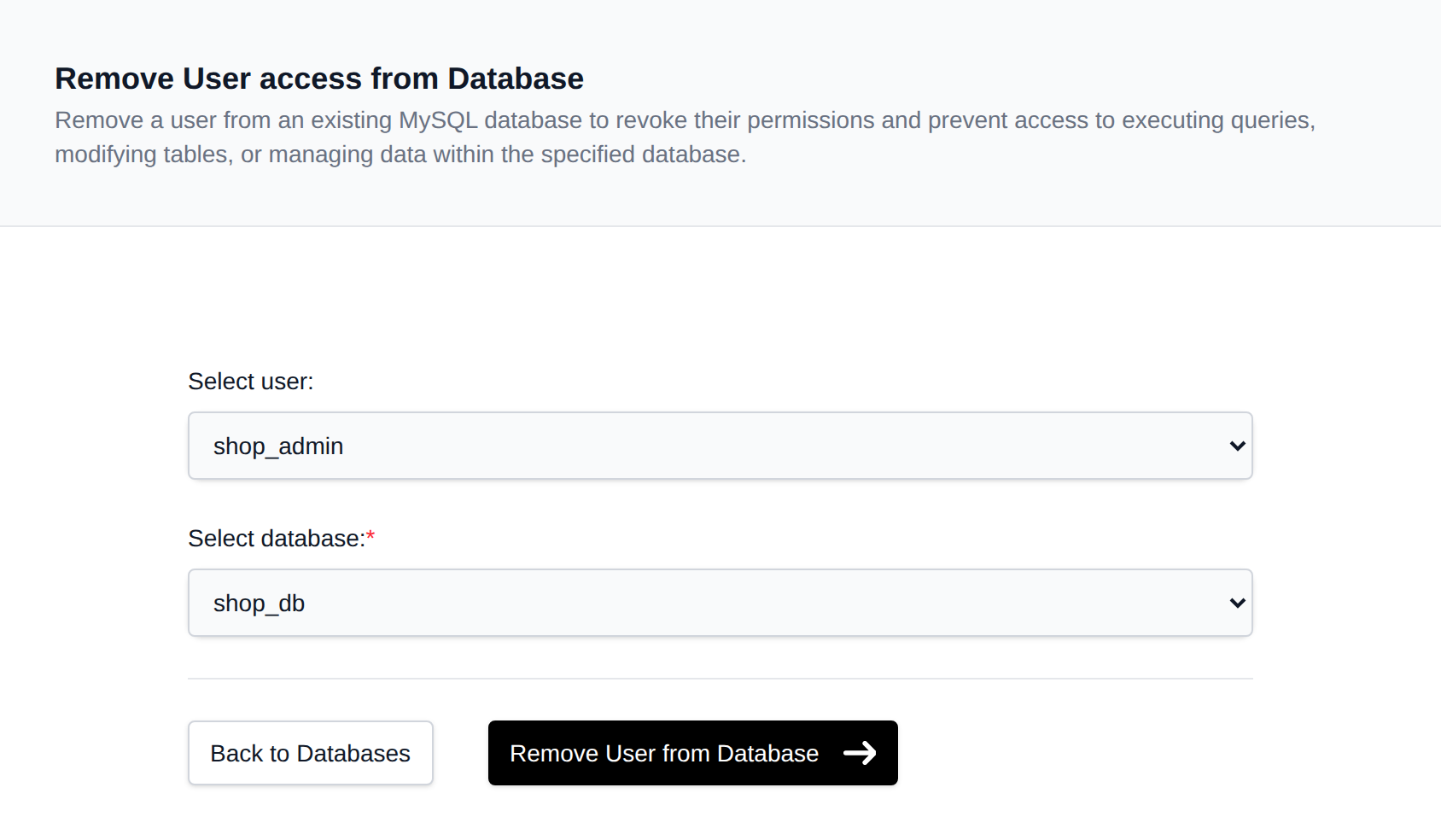
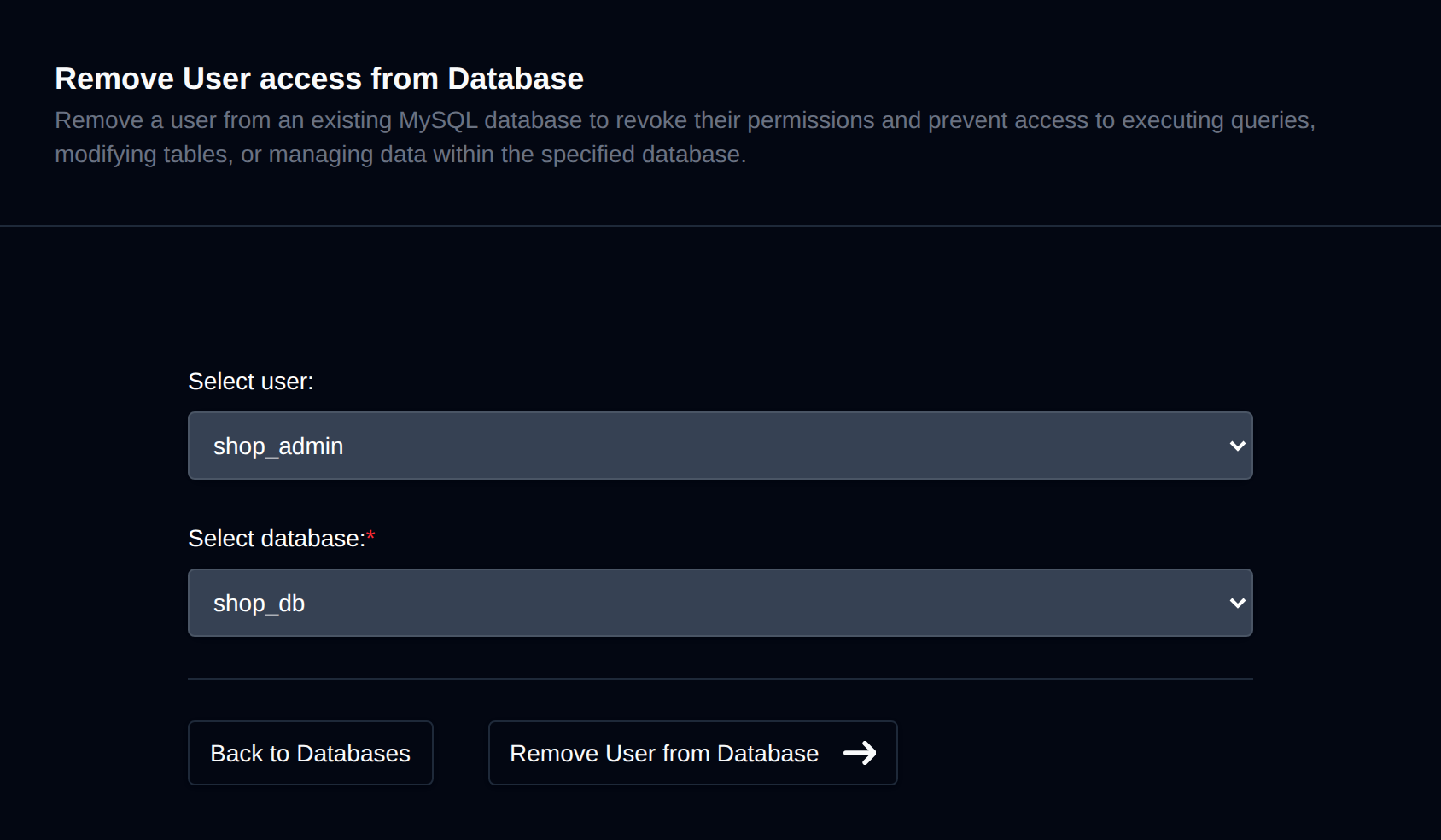
Removing a user will immediately remove all permissions for that user to the database and is useful when you want to temporarily disable a user's access to a database without actually deleting the user.
Change User Password
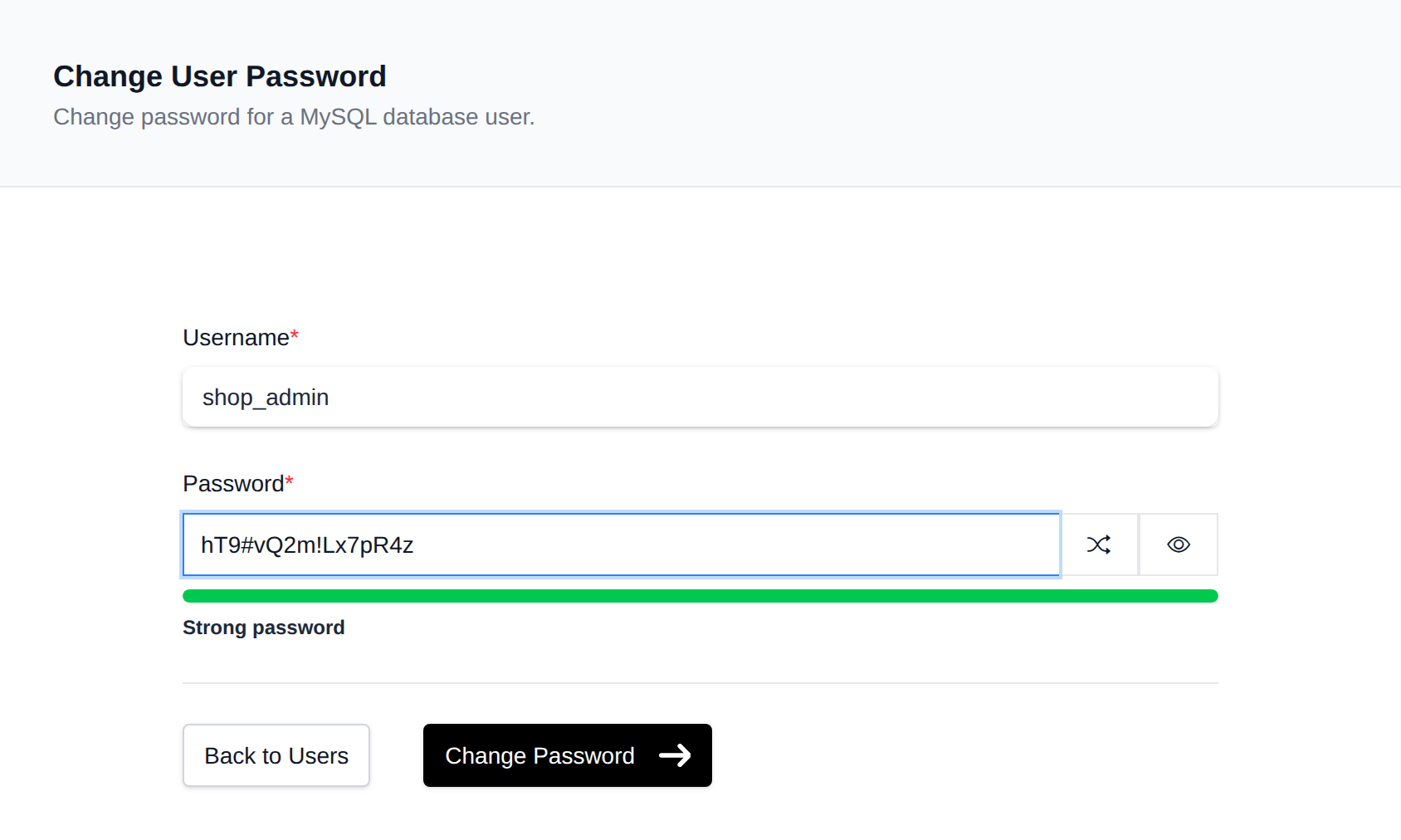
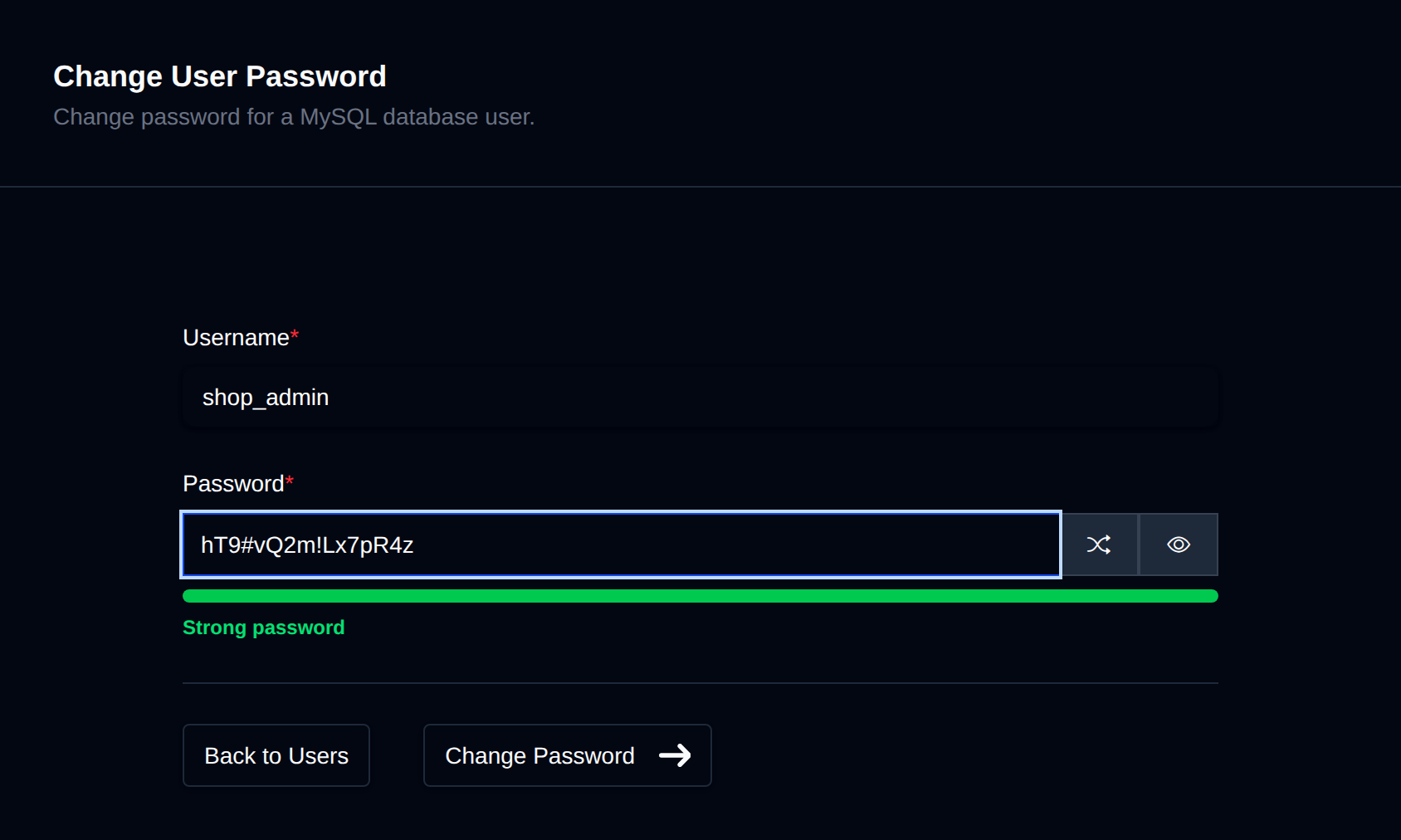
If you need to change a user's password, simply click on the "Change Password" button next to that user. On that page, enter the new password (or generate a random one), then click the "Change Password" button to save it.
Delete User
To delete a MySQL user, click the Delete button next to the user in the Users table. The button turns into Confirm with a 5-second countdown; click it again before the countdown ends to delete the user.


⚠️ Deleting a MySQL user will immediately remove that user and revoke all privileges to databases.
Bulk Actions
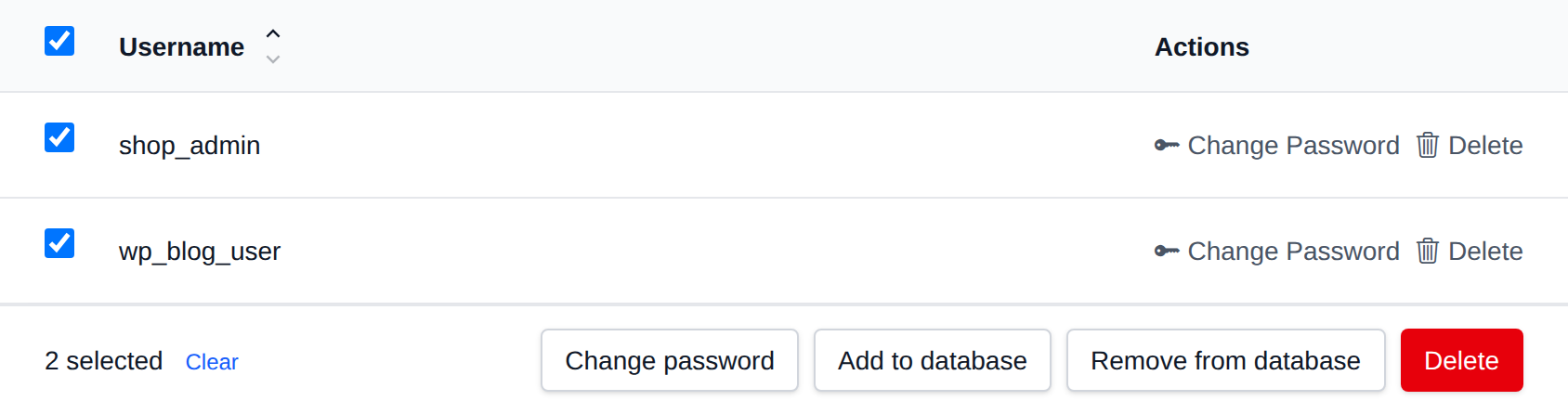
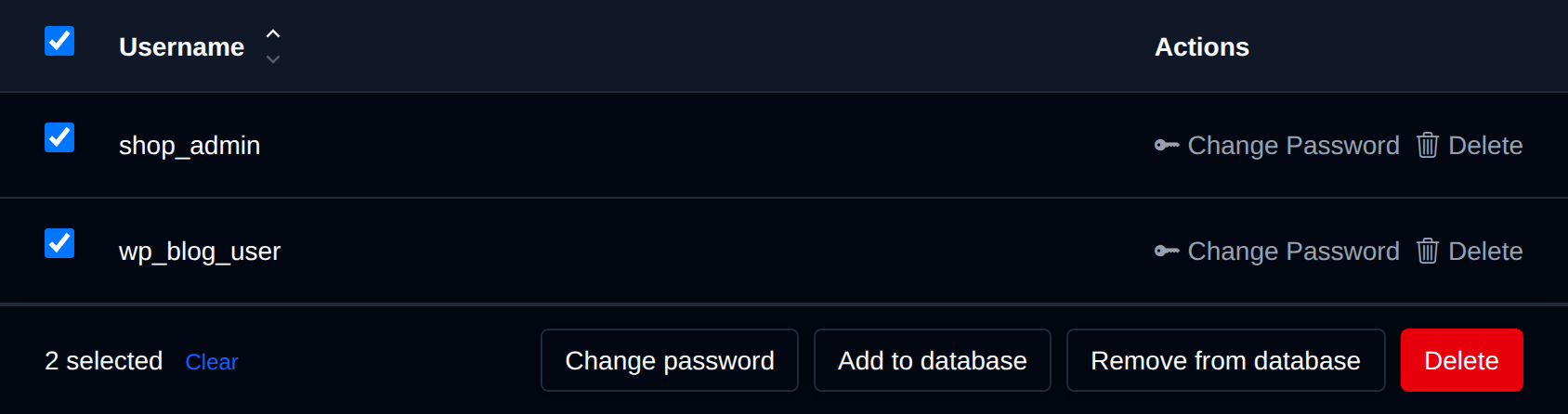
Tick the checkbox of one or more users, or the checkbox in the table header to select every user shown by the current search. A bar appears at the bottom of the page with the number selected, a Clear link and these actions:
| Action | What it does |
|---|---|
| Change password | Sets the same new password on the selected users. |
| Add to database | Gives the selected users all privileges on the database you pick. |
| Remove from database | Removes the selected users from the database you pick. |
| Delete | Permanently deletes the selected users. |
System users can't be selected.
Click an action, confirm it, and it runs on the selected users one after another. When it's done the page reloads with a notice listing the users it worked for, or which ones failed and why.